

4 Types Of Roof Insulation & Benefits
Choosing the right roof insulation can make a significant difference in your home’s energy efficiency, comfort, and overall protection. From regulating indoor temperatures to preventing moisture buildup, insulation plays a vital role in both hot and cold climates.
- Energy savings: Insulated roofs help reduce heating and cooling costs year-round.
- Comfort control: Insulation keeps indoor temperatures stable across all seasons.
- Home protection: Reduces condensation and moisture buildup in the attic.
Understanding your options is the first step to making a smart decision for your home. Below, we explore four common types of roof insulation and the key advantages of each.
Why Roof Insulation Matters
Insulation helps maintain a consistent indoor environment by slowing the transfer of heat. In the summer, it keeps the hot air out. In the winter, it helps retain warmth. Proper insulation reduces reliance on HVAC systems, lowers energy bills, and contributes to a more sustainable home.
Roof insulation also plays a role in preventing condensation, which can lead to mold, mildew, and roof deck damage. It works best when paired with a well-ventilated attic and moisture barrier system, creating a balanced building envelope that protects your home from the inside out.
To ensure this delicate balance of ventilation and thermal resistance is properly achieved, consulting a qualified contractor from Capstone Roofing is highly recommended before modifying your attic space.
Where Roof Insulation Is Installed
Roof insulation is typically installed in one of two areas: above the roof deck (known as continuous insulation) or directly below it, often in the attic floor or rafter bays. The location and type of insulation depend on the roof structure, climate, and energy goals.
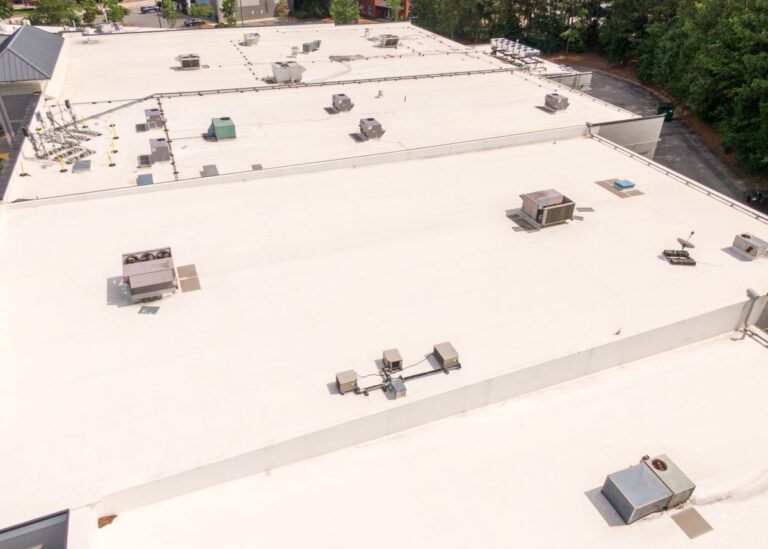
Homes with sloped roofs often use batt or blown-in insulation between the rafters, while flat roof systems may benefit more from rigid foam boards installed above the decking. Knowing your roof type helps determine the most effective solution.
Exploring the structural differences between various roof types can further clarify how specific slopes and framing dimensions dictate the exact thermal materials required for optimal efficiency.
4 Types of Roof Insulation and Their Benefits
Each insulation type offers unique advantages in terms of installation, performance, and cost. These four options are among the most commonly used in residential roofing.
1. Fiberglass Batt Insulation
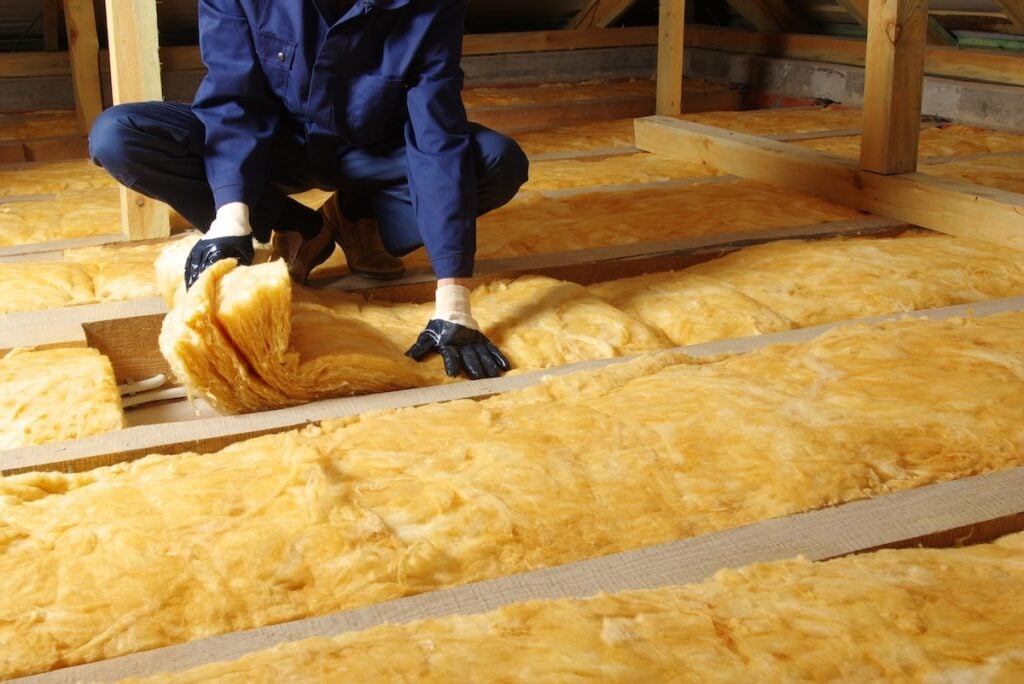
Fiberglass insulation is one of the most widely used and affordable insulation options. It comes in pre-cut batts or rolls and is commonly installed between attic joists or roof rafters.
- Cost-effective choice: Offers a high R-value per dollar for budget-conscious homeowners.
- Easy to install: Can be DIY-friendly in accessible attic spaces.
- Fire resistant: Naturally non-combustible and widely used in building applications.
2. Spray Foam Insulation
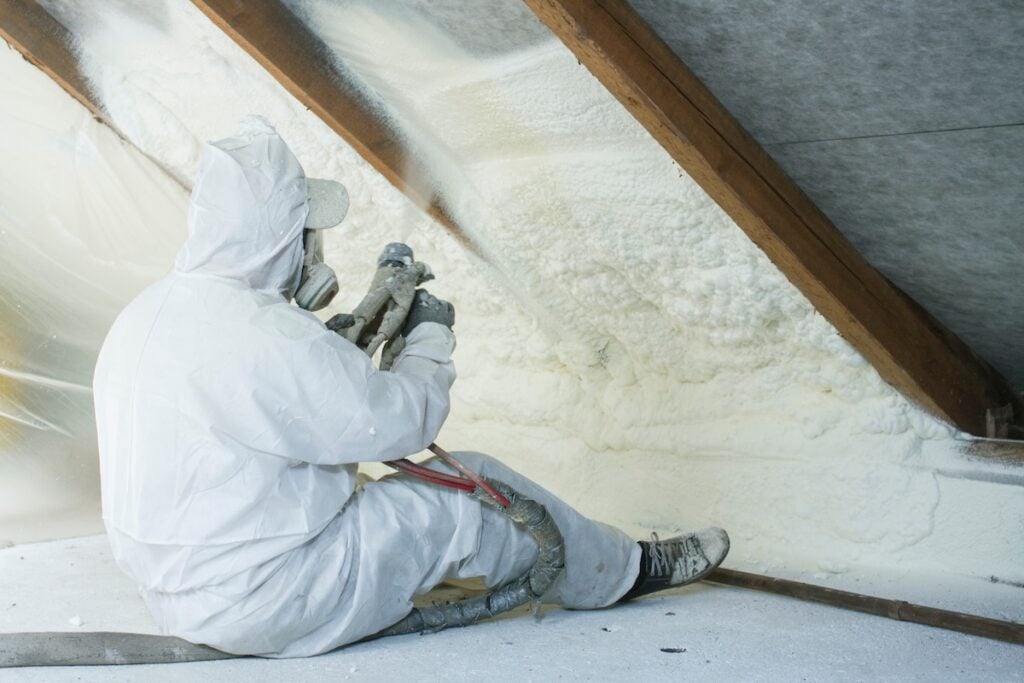
Spray foam insulation expands to fill cracks and gaps, creating an air-tight seal. It is ideal for irregular roof shapes or areas with penetrations and tight corners.
- Superior air sealing: Reduces drafts and energy loss around vents and chimneys.
- High R-value per inch: Provides excellent insulation with less material.
- Moisture resistance: Helps prevent mold and mildew by blocking vapor intrusion.
3. Rigid Foam Board Insulation
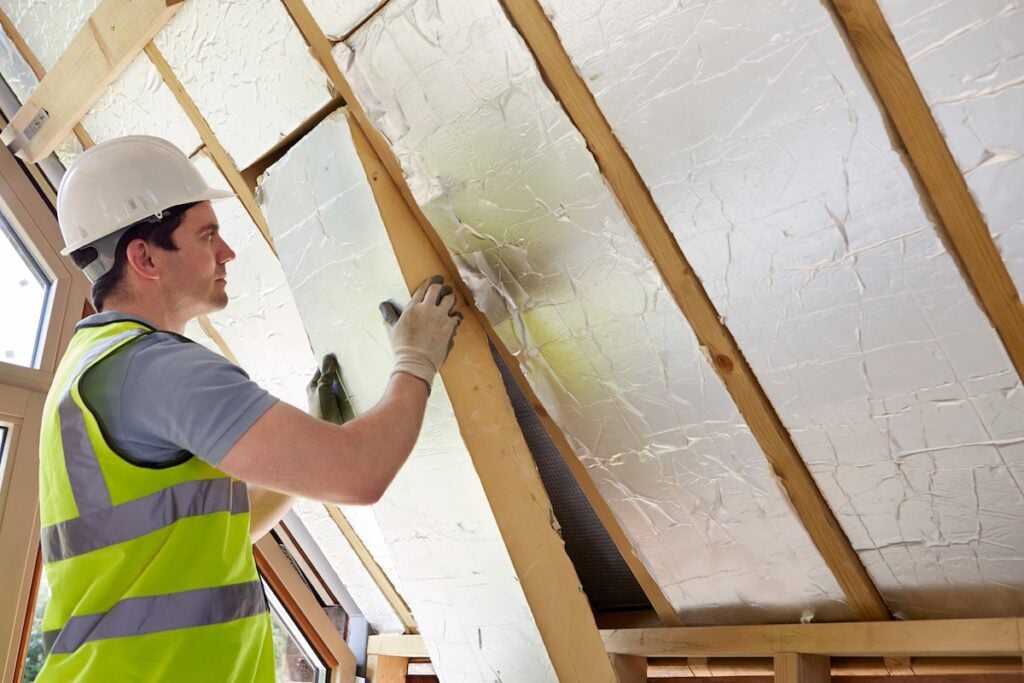
Rigid foam boards, often made from polyisocyanurate, EPS, or XPS, are commonly used in flat roofs or continuous insulation systems. These boards are installed above the roof deck or in cathedral ceilings.
- Durable and strong: Provides a stable insulation layer that resists compression.
- Continuous coverage: Eliminates thermal bridging between framing members.
- Good for retrofits: Works well in re-roofing projects and upgrades.
This dense application is especially critical during a flat roof replacement, as it provides the necessary slope and solid thermal barrier where traditional fiberglass rolls cannot be utilized.
4. Blown-In Loose-Fill Insulation
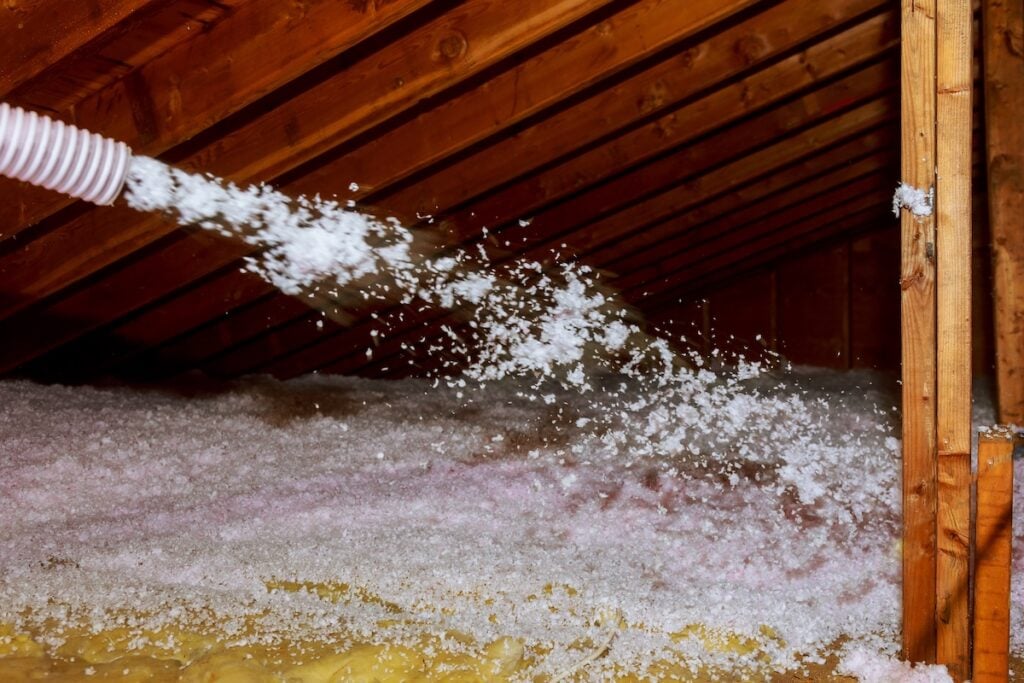
Blown-in insulation is typically made of cellulose or fiberglass and is ideal for filling irregular spaces or topping off existing insulation. It’s often used in attics with lots of obstructions.
- Even coverage: Fills gaps and voids better than batts or rolls.
- Quick to install: Can be applied efficiently by professionals using blowing machines.
- Improves existing insulation: Easily added on top of old materials to boost performance.
Factors to Consider When Choosing Insulation
No single insulation type is right for every home. Climate zone, roof design, budget, and energy goals all play a role in selecting the best material. For example, a home in a hot and humid region might benefit from moisture-resistant foam, while a home in a cold climate could rely on dense fiberglass batts paired with air sealing.
Homeowners should also consider the insulation’s R-value, which measures thermal resistance. A higher R-value generally means better performance, but the effectiveness also depends on how the material is installed and whether it works with the rest of the roofing system.
For instance, making sure the newly installed material leaves adequate clearance for your roof vents is essential to maintain proper airflow and prevent condensation buildup year-round.
Common Insulation Mistakes to Avoid
Even the best roof insulation materials won’t deliver maximum performance if they’re installed incorrectly. Some of the most common problems result from poor planning, improper installation techniques, or a lack of coordination with other parts of the roofing system like ventilation and air sealing. Avoiding these mistakes can help protect your home, reduce energy loss, and extend the life of your roof.
- Compressed insulation: Pressing or overstuffing fiberglass batts between rafters can lower their R-value and reduce thermal efficiency.
- Unsealed air leaks: Failing to seal gaps around plumbing, wiring, or attic access points allows air to bypass the insulation entirely.
- Blocked ventilation paths: Insulation that covers soffit or ridge vents disrupts airflow, leading to excess moisture in the attic.
- Inadequate ventilation: Without proper air circulation, insulation can trap humidity that contributes to mold growth and wood rot.
- Wrong material for the climate: Using insulation that isn’t moisture-resistant in a humid attic can cause sagging, deterioration, and loss of performance.
If you suspect your attic might be suffering from any of these installation errors, having a professional roofer to evaluate the space will ensure the system is corrected safely and effectively.
Does Insulation Impact Your Roof’s Lifespan?
Yes, it can. Poor insulation leads to temperature swings and moisture buildup, which stresses roofing materials over time. Warm, moist air from inside the home can rise into the attic and condense if insulation is lacking or improperly installed. This can rot the roof deck, degrade shingles from below, and reduce the effectiveness of your roof ventilation.
On the flip side, well-installed insulation contributes to roof longevity by stabilizing attic temperatures and reducing thermal stress on roofing materials. This is particularly helpful in regions with freeze-thaw cycles or extreme seasonal shifts.
Ultimately, understanding how long does a roof last under these optimized conditions proves that investing in high-quality thermal barriers directly extends the structural integrity of the entire house.
Choose the Right Insulation for Comfort and Efficiency
Roof insulation is one of the smartest ways to improve comfort, lower energy bills, and protect your home from hidden moisture damage. Whether you’re building a new home or upgrading an older one, understanding your insulation options empowers you to make the best choice for long-term performance.
Capstone Roofing Inc. is committed to helping homeowners stay informed about the many components that contribute to a healthy roof. If you’re unsure about your current roofing system or want to evaluate its performance, reach out to schedule a free inspection.


4.8 RATING

5.0 RATING

A+ RATING