

What Does Hail Damage Look Like on a Roof? 6 Warning Signs
Wondering what does hail damage look like on a roof and whether the last storm left lasting harm overhead? At Capstone Roofing Inc., we know hail can quietly compromise a roofing system long before leaks ever appear inside the home. Hail is one of the most expensive and widespread weather hazards facing homeowners today. According to State Farm, the company paid out more than $5.6 billion in hail-related claims in 2025 alone, making it one of the most frequent and costly weather hazards in the country. Roof hail damage can result in significant repair costs and may not always be immediately visible. Even small hailstones traveling at high speeds can fracture shingles, dent metal, and weaken protective layers, and the damage often hides in plain sight.
In this guide, we walk through the most common indicators of hail-related roof damage so families can make informed decisions about identifying hail damage, visually assessing the entire roof, and determining when inspections and repairs are necessary. We will cover:
- Visible signs on shingles: The most common surface clues that hail has impacted asphalt or composite roofing materials.
- Damage to other roof components: How hail affects flashing, vents, gutters, and other essential parts of the roofing system.
- When professional help is needed: The point at which a trained inspection becomes essential for protecting the home.
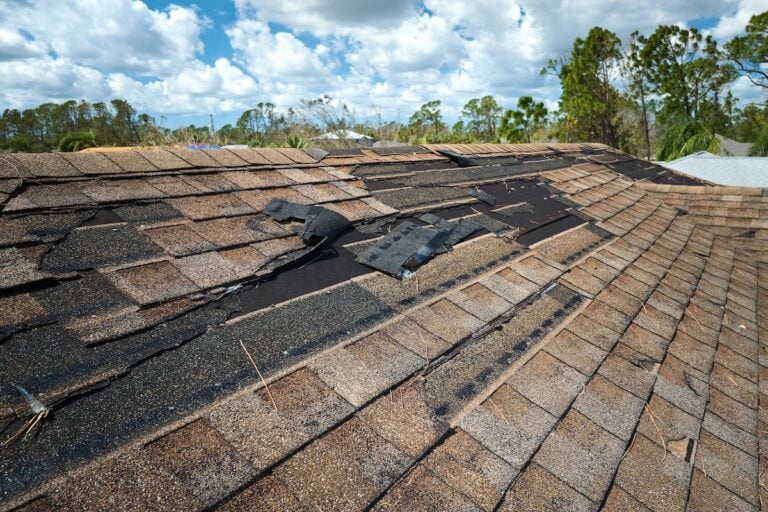
Hail damage on asphalt shingles typically appears as dark, random bruises or dents where the roofing granules have been knocked off, exposing the underlying mat.
Why Hail Damage Often Goes Unnoticed
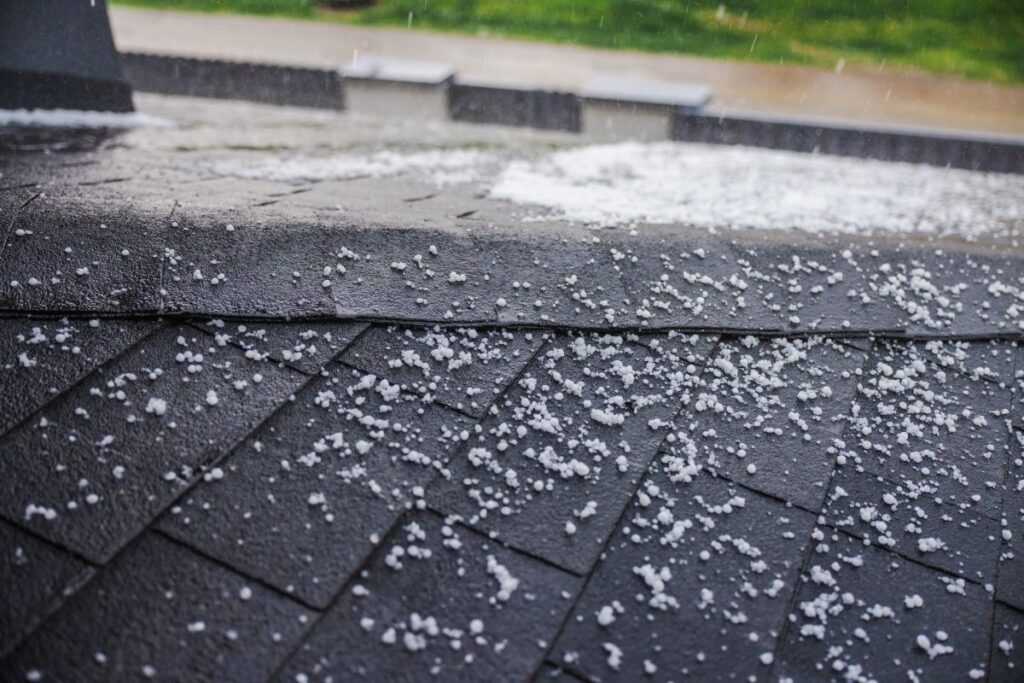
Hail damage is uniquely deceptive because it rarely announces itself. A roof can look completely normal from the ground while still suffering from impact bruises, granule loss, and weakened shingle adhesion. Often, ‘normal wear’ and ‘wear and tear’ from aging or regular exposure to the elements can be mistaken for hail damage, making it difficult for homeowners to tell the difference. Insurance adjusters assess hail damage by examining damage patterns, checking weather reports, and evaluating the overall condition of the roof to distinguish between storm damage and normal wear and tear. We have inspected countless roofs after storms where the homeowner assumed everything was fine, only to discover damage that would shorten the roof’s lifespan by years if left unaddressed. Identifying the signs early is the single most important step homeowners can take to protect their investment.
How Hailstones Affect Roofing Materials
Hailstones vary in size, density, and velocity, and each of those factors influences the type of damage left behind during hail events. A pea-sized stone may seem harmless, but when paired with strong winds and a steep impact angle, it can still bruise shingles or chip protective coatings, typically resulting in minor roof damage. Larger hail in the one-inch to two-inch range frequently causes immediate and visible harm, with severe hail capable of breaking shingles and causing significant or even severe hail damage. Understanding how different storms create different damage patterns helps us identify problems an untrained eye might miss during a casual look at the roof.
- Hailstone size: Hail size is a key factor in determining the severity of roof damage. Stones one inch or larger typically cause measurable damage to asphalt shingles and can break shingles, while smaller hailstones usually result in only minor roof damage.
- Wind speed and angle: High winds drive hail at sharper angles, concentrating impact force on specific slopes of the roof.
- Hailstone density: Denser, ice-heavy stones inflict greater damage than softer, slushier hail of the same size.
- Roof material: Asphalt shingle roof and other traditional roofing materials respond differently to hail events. For example, hail damage on asphalt shingles typically manifests as dark, random bruises or dents where the roofing granules have been knocked off, exposing the underlying mat. Metal, wood, and tile roofs each show distinct damage patterns depending on the material and the severity of the hail.
Why Delayed Inspections Lead to Bigger Problems
Many homeowners wait until a leak appears before calling a roofer, but by that point, water has likely already infiltrated the underlayment and decking. Hail damage compounds over time as exposed areas absorb moisture, freeze, thaw, and gradually deteriorate. The longer compromised shingles remain in place, the more likely it becomes that interior damage, mold growth, roof leaks, or structural rot will follow. Early detection consistently saves homeowners thousands in avoidable and costly repairs. After a hailstorm, checking gutters and downspouts for denting is a quick way to assess potential roof damage, as hail that impacts the roof often leaves marks on these components as well.
- Accelerated shingle aging: Damaged shingles deteriorate far faster than intact ones, shortening overall roof lifespan.
- Hidden moisture infiltration: Water seeps into compromised areas long before any visible leak appears inside the home, which can eventually result in roof leaks if not addressed promptly.
- Insurance claim deadlines: Most policies require claims to be filed within a set window after the storm, and missing that window can void coverage.
- Higher repair costs: Small areas of damage spread over time, turning what could have been a simple repair into a full replacement and leading to costly repairs.
6 Warning Signs of Hail Damage on a Roof
When we inspect a roof after a hailstorm, we look for a specific set of indicators that reveal both the severity and the location of impact zones. Below are the six most reliable warning signs that hail has caused damage requiring professional attention.
- Dented shingles, cracked shingles, or missing shingles: Hail impact can create visible impact marks, dark spots, and knocked loose granules on the roof surface. Dented shingles compromise the roof’s watertight seal, while cracked shingles can cause leaks and interior water damage. Missing shingles may not always be obvious, so it’s important to look for these subtle signs of hail damage.
- Granule loss in gutters and downspouts: Accumulation of shingles granules or protective granules in gutters indicates that hail has knocked loose the granules from the roof surface. This loss exposes the asphalt beneath, underlying asphalt, or black asphalt mat, resulting in exposed asphalt. Granule loss is characterized by bald, dark patches on shingles, which are a key indicator of hail impact. One of the first signs of hail damage is the sudden appearance of dark patches on shingles, which form when hailstones knock off protective granules, leaving the black asphalt layer exposed. A significant accumulation of shingle granules in gutters indicates possible shingle damage.
- Cracked or split shingles: Sharp hail impact can split shingles cleanly, exposing the layers underneath to wind, rain, and ultraviolet damage.
- Dings on metal flashing and vents: Visible dents or impact marks on metal components are one of the clearest signs hail struck with enough force to harm shingles too.
- Damaged gutters or downspouts: Dents, dings, or misalignment in gutters often mirror the impact patterns found on the roof surface itself.
- Exposed shingle mat or fiberglass: Black or shiny patches where granules have been knocked away reveal the underlying black asphalt mat, which deteriorates rapidly when exposed. Exposed asphalt is a sign of severe hail impact and can lead to further deterioration, such as cracking or leaks in the roofing system.
Where to Look for Hail Damage on a Roof
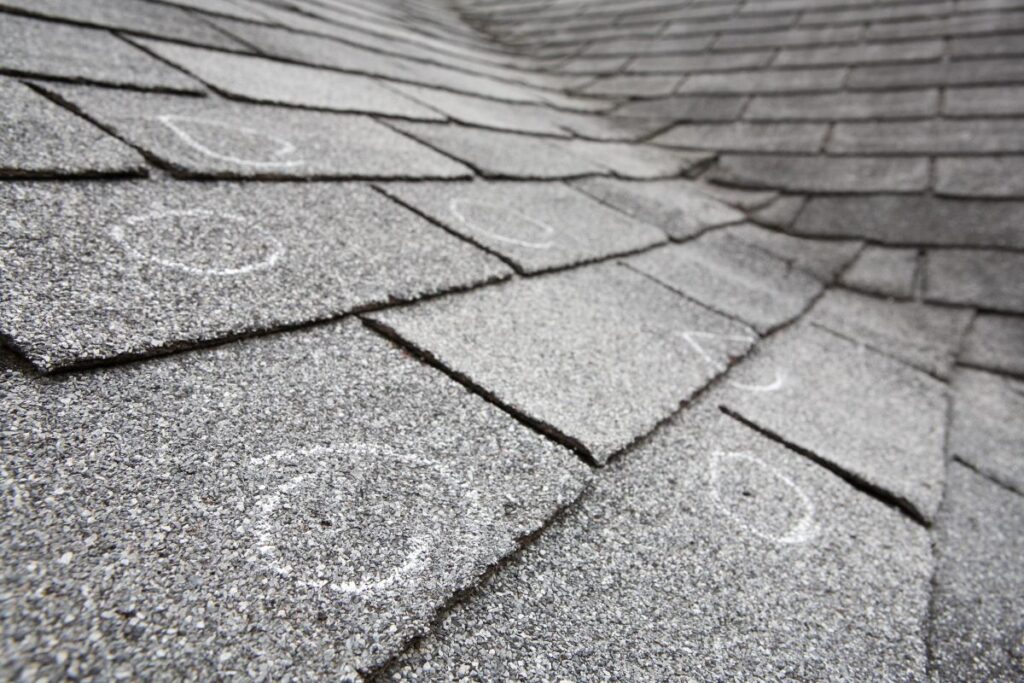
Hail does not strike a roof uniformly, so we always inspect specific zones where damage tends to concentrate. Before making any repairs, homeowners should document everything thoroughly, take close up photos, timestamped images, and gather weather reports confirming hail in your area. This documentation is crucial for insurance claims. For a safer initial inspection, use binoculars to examine the entire roof from the ground, looking for inconsistent color or texture.
Knowing where to look helps homeowners spot trouble early and gives our team a starting point during professional evaluations. In addition to the roof surface, check window screens for tears, vinyl siding for cracking or chipping, wood siding for splits or dents, and dented gutters. After a hailstorm, closely inspect your gutters and downspouts for denting, as this is a quick indicator of whether hail was significant enough to cause roof damage.
Shingled Surfaces and Ridge Lines
The broad shingled fields and ridge lines of a roof typically take the brunt of a hailstorm. Ridge caps in particular sit at the highest point and absorb direct impacts from nearly every angle. We pay close attention to these areas because they often reveal the most concentrated damage and provide a strong indication of what the rest of the roof has experienced. Steep slopes facing the storm’s direction tend to suffer more than sheltered or low-pitch sections.
- Ridge caps: These high-point shingles absorb the most direct impacts and reveal storm severity better than any other roof area.
- Storm-facing slopes: Whichever side of the roof faced the wind during the storm will show the heaviest concentration of damage.
- High-pitch sections: Steeper slopes often sustain more visible damage because hail strikes them at a closer-to-perpendicular angle.
- Open shingle fields: Wide, unobstructed shingled areas are where we typically find the clearest evidence of impact bruising. Hail damage on the shingle surface often appears as marks with sharp edges, indicating recent hail impact. Random patterns of damage across the roof are a strong sign of hail impact, as opposed to the more uniform wear or linear marks caused by foot traffic.
Soft Metal Components
Soft metals such as aluminum roof vents, pipe boots, flashing, and gutter edges act as visual evidence of a storm’s intensity. We examine these components carefully because they reveal impact severity even when shingle damage is harder to spot. Dents in soft metal components like roof vents and flashing are important indicators of roof damage. Dented metal often signals that surrounding shingles sustained matching damage that may not be visible from the ground.
- Roof vents and attic vents: Dents or dings on these soft metal components confirm hail impact and can indicate broader roof-level damage.
- Pipe boots: Small dents or dimples on these vulnerable metal caps confirm hail struck with enough force to damage shingles nearby.
- Roof flashing around chimneys and skylights: Bent or dented flashing often signals compromised seals that can leak even without obvious gaps.
- Gutter aprons and drip edges: Dings along these metal strips suggest the surrounding shingles likely sustained matching impact damage.
Skylights and Roof Accessories
Skylights, satellite dishes, solar panels, and decorative elements can all reveal storm severity in unique ways. Cracked skylight glass or shattered protective covers obviously demand immediate attention, but subtler signs matter too. Some hail damage is not immediately visible and requires close inspection, such as: cracked seals around skylight frames, dented housings on rooftop accessories, or chipped paint or finish on any installed equipment. These accessory points often experience direct hits because they protrude above the roof plane, and chipped paint on metal components can lead to future rust and corrosion.
- Skylight glass and seals: Cracks, chips, or compromised sealant around skylights can lead to interior water damage if left unaddressed.
- Solar panels: Dented frames or cracked panel surfaces affect both performance and the integrity of the surrounding roof area.
- Satellite dishes and antennas: Visible dents on these accessories serve as reliable proof of storm intensity even when other signs are minimal.
- Decorative finials and weather vanes: Bent or chipped decorative pieces often sustain the first visible damage in a hailstorm.
When to Call a Roofing Professional
Some hail damage is obvious, but much of it requires trained eyes and proper safety equipment to assess accurately. Climbing onto a roof without experience is dangerous, and untrained inspections often miss the subtle bruising and granule loss that indicate real harm.
Signs That Demand an Immediate Inspection
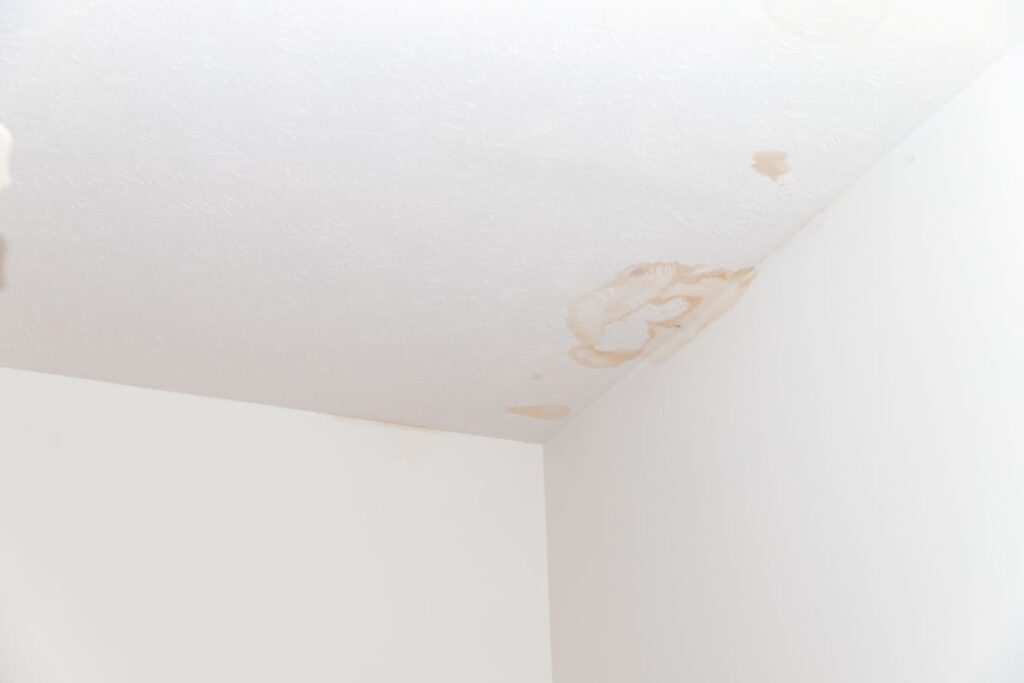
Certain situations warrant professional evaluation as soon as conditions allow. Acting quickly protects both the home and any potential insurance claim. We always recommend reaching out promptly when storm conditions or visible damage suggest the roof may have been compromised, since even minor delays can lead to bigger problems down the line.
- Recent severe storms with severe hail one inch or larger: Severe hail can cause severe damage to roofing materials, such as cracked or split shingles, exposing the underlayment or even creating holes. Recent severe storms with hail one inch or larger almost always cause damage worth investigating, even when the roof looks fine from below.
- Visible debris or shingle pieces on the ground: Loose shingle fragments around the home suggest direct roof impact and possible structural compromise.
- Interior water spots or ceiling stains: Any new moisture inside the home after a storm points to roof penetration that requires urgent attention.
- Damaged neighboring properties: When nearby homes show storm damage, it is highly likely the surrounding roofs sustained similar harm.
- Insurance claim deadlines approaching: Most policies require timely reporting, and we can help document damage before deadlines expire.
What to Expect During a Professional Hail Damage Inspection
A thorough hail damage inspection involves much more than walking the roof. Our team examines shingle integrity, flashing condition, gutter alignment, attic ventilation, and interior signs of moisture to assess your roof’s integrity and identify any damage on your roof. We document findings with photographs and detailed notes that can support insurance claims and guide repair decisions. The process typically takes between thirty minutes and two hours depending on roof size and damage extent.
- Comprehensive exterior assessment: We evaluate every slope, ridge, and accessory point to identify all areas of potential damage on your roof, ensuring no aspect of the roof’s integrity is overlooked.
- Photo and video documentation: Detailed visual records give insurance adjusters the evidence they need to approve fair claims.
- Attic and interior checks: We look for water stains, daylight penetration, and insulation issues that indicate hidden roof damage.
- Plain-language reporting: Homeowners receive clear explanations of findings along with prioritized recommendations for any necessary repairs.
Protecting Your Home With Capstone Roofing Inc.
A roof is one of the most important investments a homeowner makes, and protecting it from the long-term effects of hail damage requires both vigilance and expertise. At Capstone Roofing Inc., we bring years of hands-on experience to every inspection, and we treat each roof with the same care we would give our own homes. Our team is committed to honest assessments, transparent communication, and quality workmanship that stands the test of time. We understand the local climate, the materials that perform best in our region, and the documentation insurance companies expect, which means homeowners get knowledgeable guidance from start to finish. If a recent storm has left questions about what hail damage looks like on a roof, we are ready to help. Contact Capstone Roofing Inc. today for a free estimate and expert guidance from a team you can trust.


4.8 RATING

5.0 RATING

A+ RATING