

Roof Scupper: 5 Benefits for Commercial Drainage
A roof scupper is one of the most important components of any commercial flat roof drainage system, providing a reliable outlet for water that needs to leave the roof quickly and safely. At Capstone Roofing Inc., we have installed and maintained scupper systems on countless commercial properties, and we understand the critical role they play in protecting buildings from water damage, ponding, and structural strain. Properly designed scuppers work in concert with primary drains to handle peak rainfall and serve as a safety net when drainage demand exceeds capacity. Understanding how scuppers function and the benefits they bring helps commercial property owners make informed decisions about their roofing systems.
In this guide, we walk through everything commercial property owners need to know about roof scuppers, including how they work, their benefits, and the key factors that affect their performance. We will cover:
- How roof scuppers function: A clear explanation of how scuppers integrate with a commercial drainage system.
- Five major benefits of scuppers: The performance advantages scuppers deliver for commercial buildings of all kinds.
- Maintenance and installation considerations: What property owners should know about keeping scuppers performing at their best.
What Is a Roof Scupper?
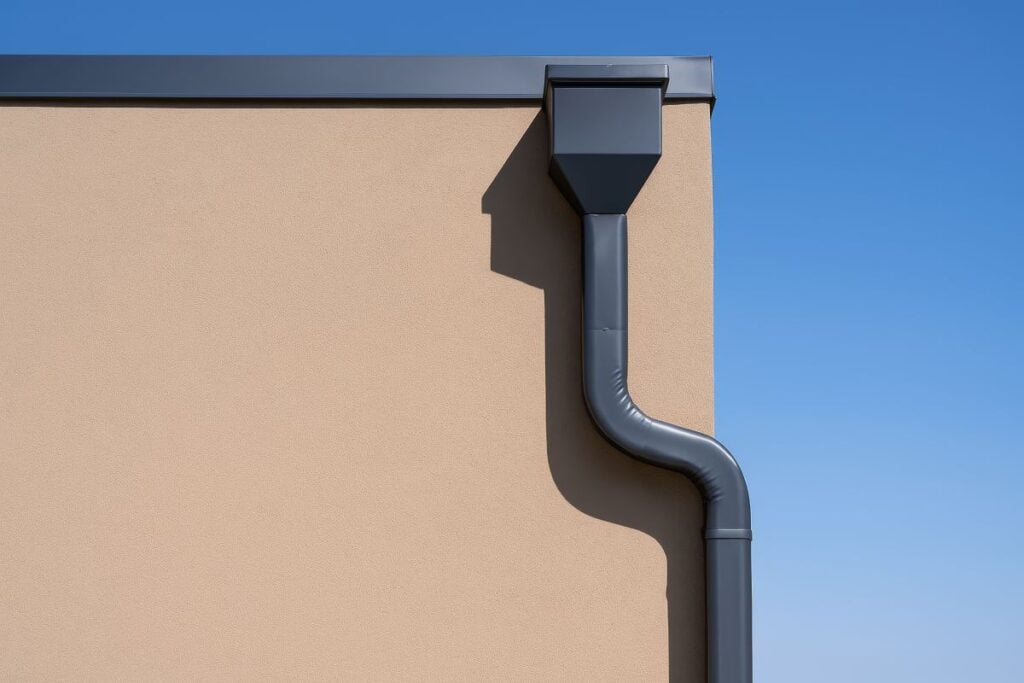
A roof scupper is an opening built into the parapet wall or edge of a flat or low-slope roof that allows water to drain off the surface. Scuppers can serve as primary drainage points or as secondary overflow protection alongside internal roof drains. They are commonly used on commercial buildings, parking decks, and industrial facilities where flat or near-flat roofs require reliable drainage solutions. The simplicity, durability, and visibility of scuppers make them a popular choice for both new construction and roof replacement projects.
How Scuppers Work in a Drainage System
Scuppers function by providing a low-resistance path for water to flow off the roof surface and away from the building. Water reaches the scupper opening through the natural slope of the roof, exits through the parapet wall, and drains either through an exterior downspout or directly onto a splash block below. Understanding the basics of how scuppers operate helps property owners appreciate the role they play in the overall drainage system.
- Opening placement: Scuppers are positioned at the low points of the roof where water naturally collects.
- Through-wall design: The scupper passes through the parapet wall, allowing water to exit the roof perimeter.
- External drainage: Water often exits into a conductor head or downspout that carries it to the ground.
- Visible function: Property owners can typically see scuppers working during heavy rain, providing easy visual verification.
Primary Scuppers Versus Overflow Scuppers
Commercial drainage systems often include both primary and overflow scuppers to provide redundant protection against ponding water. Primary scuppers handle routine drainage during typical rainfall, while overflow scuppers serve as a backup when the primary system becomes overwhelmed or blocked. Both types play distinct roles, and modern building codes typically require overflow protection on flat roofs with parapet walls.
- Primary scuppers: Positioned at roof level to handle routine drainage during standard rainfall events.
- Overflow scuppers: Installed slightly higher than primary scuppers to provide emergency drainage when primary systems are blocked.
- Code requirements: International Building Code and local amendments typically require secondary drainage on parapeted flat roofs.
- Redundant protection: The dual system protects against both clogged drains and rainfall events that exceed design capacity.
5 Benefits of Roof Scuppers for Commercial Drainage
Roof scuppers offer significant performance and protection advantages compared to drainage systems that rely solely on internal drains. Below are the five most important benefits scuppers deliver for commercial properties. Each one plays a role in protecting the building, extending the life of the roof, and reducing long-term maintenance demands.
1. Reliable Protection Against Ponding Water
Ponding water is one of the most damaging conditions a flat roof can experience, and scuppers are specifically designed to prevent it. Scuppers provide a direct path for water to leave the roof, reducing the risk of standing water that compromises roofing materials and underlying decking. We have seen countless commercial roofs benefit from properly installed scupper systems that handle peak rainfall reliably.
- Quick water removal: Scuppers provide a fast, direct exit point for water during heavy rainfall.
- Membrane protection: Reducing standing water extends the useful life of single-ply, modified bitumen, and built-up roofs.
- Structural relief: Preventing ponding reduces the weight load placed on the roof deck and supporting structure.
- Insulation preservation: Less water on the roof means drier insulation and better long-term thermal performance.
2. Simple, Reliable, and Low-Maintenance Design
One of the biggest advantages of scuppers is their straightforward design. Unlike internal drains, which involve pipes running through the building’s interior, scuppers consist of an opening through the parapet wall with minimal moving parts. This simplicity translates into excellent reliability and far lower maintenance requirements over the life of the roof. We always appreciate working with scupper systems because their performance is easy to verify and their maintenance is straightforward.
- Few failure points: The simple design has minimal components that can break, clog internally, or fail unexpectedly.
- Easy visual inspection: Property owners and inspectors can confirm scupper function with a simple ground-level view.
- Straightforward cleaning: Removing debris from a scupper opening requires no specialized equipment or interior access.
- Long service life: Properly installed scuppers can perform reliably for decades with minimal intervention.
3. Lower Installation and Repair Costs
Scuppers typically cost less to install than internal drain systems because they do not require interior plumbing runs, complex flashing, or penetrations through the roof deck. Repairs are also generally less expensive when scuppers do need attention, since the work happens at the roof edge rather than involving interior building components. We often recommend scuppers to commercial property owners looking for cost-effective drainage solutions that still meet code and perform reliably.
- No interior plumbing: Scuppers eliminate the need for drain pipes running through the building’s interior spaces.
- Reduced flashing complexity: Fewer roof penetrations mean lower installation costs and fewer potential leak points.
- Accessible repairs: Most scupper repairs can be performed from the roof edge without specialized interior access.
- Compatible with most roof types: Scuppers work well with EPDM, TPO, PVC, modified bitumen, and built-up roof systems.
4. Reduced Risk of Interior Water Damage
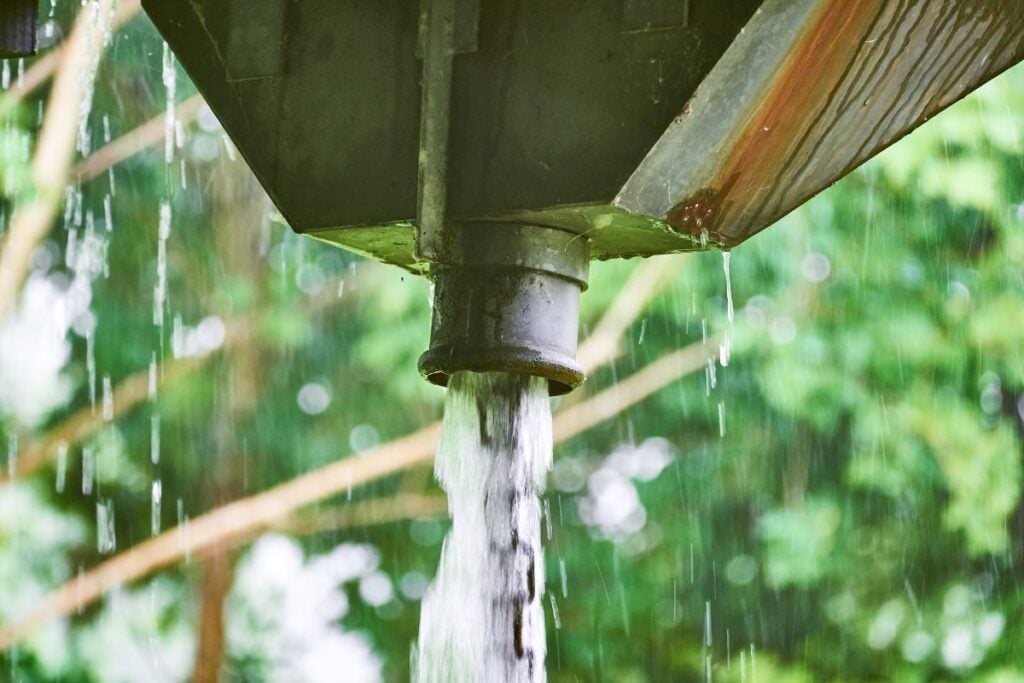
Because scuppers route water through the exterior parapet wall rather than through the building interior, they significantly reduce the risk of interior water damage when something goes wrong. Internal drains that develop leaks can cause hidden water intrusion that affects ceilings, walls, and stored contents inside the building. Scuppers eliminate this risk because all water travels along the exterior of the structure from the moment it leaves the roof. We have worked with many property owners who chose scuppers specifically for this peace of mind.
- Exterior water path: Water travels outside the building envelope from rooftop to ground level.
- Limited interior risk: Even if a scupper develops a problem, the resulting water typically stays outside the building.
- Protected interior spaces: Inventory, equipment, and tenant spaces face less exposure to drainage-related water damage.
- Simpler insurance and warranty claims: Issues are easier to identify and address when they remain visible and external.
5. Compliance With Modern Building Codes
Modern building codes recognize the importance of redundant drainage on flat roofs, and overflow scuppers are one of the most commonly accepted ways to meet code requirements for secondary drainage. Whether for new construction or roof replacement, scuppers help commercial properties meet International Building Code standards and local code amendments. We always design drainage systems with current code requirements in mind, and scuppers consistently provide an efficient path to compliance.
- Secondary drainage compliance: Overflow scuppers satisfy IBC requirements for emergency drainage on parapeted roofs.
- Local code flexibility: Scuppers work with most municipal codes and can be sized to specific local requirements.
- Reroofing applications: Existing buildings undergoing roof replacement often benefit from scupper-based compliance solutions.
- Documentation simplicity: Scupper installations are easy to document for permitting and inspection purposes.
Roof Scupper Maintenance Considerations
Like every part of a commercial roofing system, scuppers perform best when they receive regular attention. Routine maintenance keeps scuppers clear, identifies any developing issues, and supports the long-term health of the entire drainage system. We always include scupper inspection as part of any commercial roof maintenance program.
Common Scupper Maintenance Tasks
Most scupper maintenance is straightforward and focused on keeping the opening clear and verifying that water flows freely during rainfall. Regular attention prevents the small issues that can otherwise turn into ponding water, leaks, or interior damage. Property owners benefit from making scupper checks part of their routine roof inspections.
- Debris removal: Clear leaves, branches, and accumulated debris from scupper openings on a regular schedule.
- Sealant inspection: Check the sealant and flashing around the scupper opening for cracks, gaps, or separation.
- Conductor head and downspout checks: Verify that any downspouts connected to scuppers are clear and properly attached.
- Flow verification: During or after rainfall, confirm water flows freely through the scupper without backup.
Frequently Asked Questions About Roof Scuppers
Commercial property owners often have similar questions about scupper systems. Below are direct answers to the questions we hear most often. These answers reflect general industry guidance and can be tailored to specific buildings during a professional consultation.
What Is the Difference Between a Roof Drain and a Scupper?
A roof drain is an internal drainage component that collects water and routes it through pipes inside the building, while a scupper is an opening in the parapet wall that allows water to drain off the roof through the exterior. Roof drains are common on large commercial buildings, while scuppers are often used as primary drainage on smaller buildings or as secondary overflow protection on larger ones. We help property owners choose the right combination based on roof size, code requirements, and budget considerations.
- Roof drains: Internal drainage components that route water through pipes inside the building.
- Scuppers: External openings in parapet walls that allow water to exit the roof through the perimeter.
- Use cases: Roof drains suit large buildings; scuppers work well as primary or secondary drainage on most commercial roofs.
- Combined systems: Many commercial buildings use both drains and scuppers for redundant protection.
How Often Should Scuppers Be Inspected?
Roof scuppers should be inspected at least twice a year, in spring and fall, along with after any major weather event. Regular inspections help catch debris blockages, sealant failures, or flashing issues before they cause drainage problems. Properties in heavily wooded areas or regions with severe weather often benefit from quarterly inspections. We include scupper inspection as a standard part of our commercial roof inspection process.
- Biannual inspection: Spring and fall checks align with standard commercial roof maintenance schedules.
- Post-storm inspection: Any major weather event warrants a check of scupper function and condition.
- Heavy-debris properties: Buildings near mature trees may need quarterly attention to prevent blockages.
- Documentation: Keep records of all scupper inspections for warranty and maintenance planning purposes.
Can Existing Buildings Be Retrofitted With Scuppers?
Most existing buildings can be retrofitted with scuppers during a reroofing project or as a standalone drainage upgrade. The process involves creating an opening through the parapet wall, installing the scupper assembly, and integrating it with the roof membrane and any associated downspouts. We work with property owners to evaluate whether scupper retrofits make sense based on the building’s structure, drainage demand, and overall roofing condition.
- Reroofing opportunity: Roof replacement projects are an ideal time to add or upgrade scupper systems.
- Standalone retrofits: Scuppers can also be added independently of a full roof replacement when needed.
- Structural evaluation: A professional assessment determines whether the parapet wall and roof structure support the modification.
- Code compliance: Retrofits should meet current building code requirements for secondary drainage.
Trust Capstone Roofing Inc. for Commercial Roof Scupper Installation and Maintenance
Roof scuppers play a vital role in protecting commercial buildings from water damage, and getting them designed, installed, and maintained correctly makes a real difference in long-term performance. At Capstone Roofing Inc., we bring deep commercial roofing experience to every scupper project and treat each property with the same care we would give our own. Our team takes time to understand each building’s drainage demands, recommend the right scupper configuration, and complete the work to standards that protect the property for years to come. We pride ourselves on honest assessments, transparent pricing, and craftsmanship that delivers reliable performance. If you are evaluating roof scupper options for your commercial property or want a professional inspection of your current drainage system, we are here to help. Contact Capstone Roofing Inc. today for a free inspection and expert guidance from a team you can trust.


4.8 RATING

5.0 RATING

A+ RATING