

Flat Roof Leak Repair: 6 Expert Tips for Quick Fixes
Flat roof leak repair starts with locating the source quickly, since water on a flat roof rarely enters the building directly below the actual leak point. At Capstone Roofing Inc., we have handled countless flat roof emergencies, and we know that the right approach in the first 24 hours often determines whether a small leak becomes a major repair project. Ponding water is one of the most common culprits behind flat roof leaks. Acting quickly on any sign of a flat roof leak protects the building, the interior, and the long-term life of the roofing system.
In this guide, we walk through the six most effective expert tips for handling a flat roof leak and the steps that lead to a lasting repair. We will cover:
- How to locate a flat roof leak: Why the leak source is rarely directly above the interior water spot and how to track it down.
- Six expert repair tips: A clear breakdown of the practical fixes used to address common flat roof leak scenarios.
- When to call a professional: The point at which a flat roof leak should be left to experienced commercial roofing experts.
Why Flat Roof Leaks Need Immediate Attention
Flat roofs do not shed water the way pitched roofs do. Instead, they rely on slope, drainage, and a continuous waterproof membrane to keep moisture out. When any part of that system fails, water has more time to find weaknesses and infiltrate the building. We have seen small flat roof leaks escalate into serious problems within days, since trapped moisture can damage insulation, decking, ceilings, and interior contents long before the leak is visible from the ground.
How Flat Roofs Are Built and Why They Leak
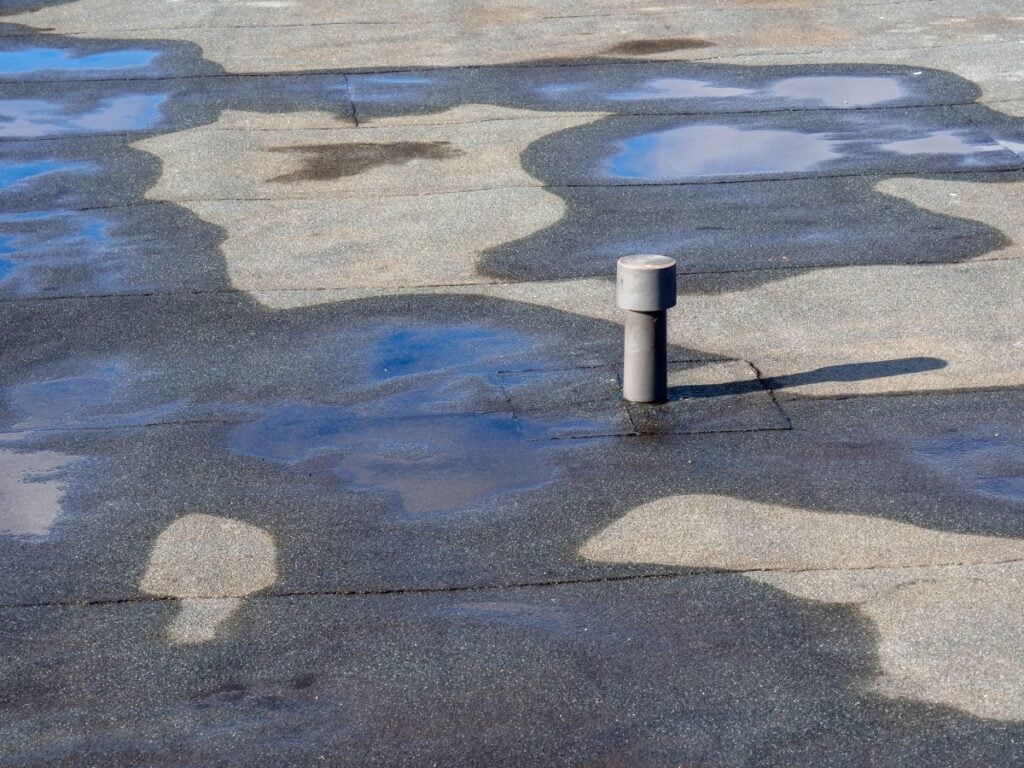
Flat roofs are not actually flat. They are designed with a slight slope, typically a quarter inch per foot, to direct water toward drains, scuppers, or gutters. Over time, that slope can fail because of structural settling, ponding water weight, or membrane wear. When water sits on the surface longer than it should, often because of inadequate drainage, it becomes a chronic problem that lets water pool and slowly work its way into seams, around penetrations, and through small membrane defects. Understanding how flat roofs are designed helps property owners recognize where leaks typically begin.
- Membrane wear: Single-ply, modified bitumen, and built-up roofing materials all degrade over time from sun exposure and weather cycles, and aging surfaces can develop blistering or alligatoring that makes leaks more likely.
- Seam failure: Seams between membrane sections are common leak points when adhesives or heat welds break down.
- Penetration issues: HVAC units, vents, and drains create openings in the membrane that need careful, ongoing sealing.
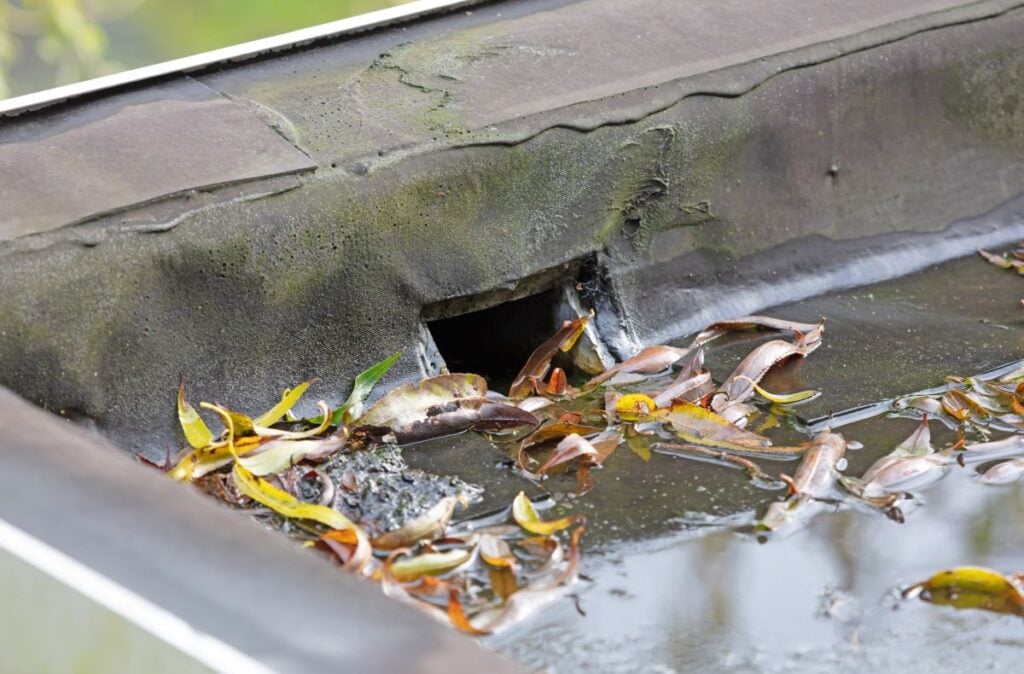
- Drainage problems: Clogged drains, scuppers, or gutters allow water to pond and accelerate membrane breakdown.
Why Leak Source Tracing Is Difficult on Flat Roofs
Water entering through a flat roof often travels significant distances between the entry point and the spot where it shows up inside the building. The water follows the path of least resistance, which usually means flowing along the underside of the membrane, through insulation seams, and across the roof deck before finally dripping into the interior. We always trace leaks carefully rather than assuming the visible water spot reveals the leak source.
- Water migration: Moisture can travel several feet horizontally before appearing through a ceiling.
- Hidden saturation: Insulation often holds water for extended periods, masking the true leak location.
- Multiple entry points: What looks like one leak may actually be several smaller leaks combined.
- Time delay: A leak that appears today may have started weeks or months ago.
6 Expert Tips for Flat Roof Leak Repair
When a flat roof develops a leak, a methodical approach delivers far better results than rushed patchwork. Below are the six expert tips we follow when handling flat roof leak repair. Each step plays a critical role in identifying the true source of the leak and creating a fix that lasts.
1. Stop Interior Damage First
The very first step in any flat roof leak situation is protecting the interior of the building while the repair is being planned and executed. Water already inside the structure needs to be contained, and any contents below the leak should be moved or covered before they sustain further damage. Quick interior protection buys time for proper diagnosis and repair, and it limits the secondary damage that often costs more than the actual roof repair itself.
- Catch active drips: Place buckets, plastic bins, or tarps under any active leak points inside the building.
- Move valuables: Relocate inventory, equipment, electronics, and furniture away from the affected area immediately.
- Document the damage: Photograph everything for insurance purposes before any cleanup or repair work begins.
- Cover ceiling tiles: Remove saturated ceiling tiles to prevent collapse and reduce mold growth in suspended ceilings.
2. Locate the Actual Leak Source
Finding the true leak source is the most important part of flat roof leak repair because patching the wrong area wastes time and lets the real problem continue. We always start by inspecting the area above and around the interior leak, then expand outward to check seams, penetrations, drains, and any low spots where water might pond. A thorough visual inspection often reveals the source, although moisture scanning or smoke testing may be needed for elusive leaks. Tracing the leak correctly the first time saves significant time and cost.
- Check directly above the leak: Examine the roof surface above the interior leak point as a starting reference only.
- Inspect roof penetrations: Look closely at HVAC curbs, vents, drains, and pipe boots where most flat roof leaks originate.
- Examine all seams: Check membrane seams for separation, lifting, or visible cracks across the entire roof area.
- Look for ponding water: Identify low spots where water collects and where membrane damage is more likely to occur.
3. Clear and Dry the Repair Area
Before any repair material can be applied, the area around the leak needs to be thoroughly cleaned and dried so repair materials adhere properly. Most repair materials, including sealants, patches, and membrane sections, require clean, dry surfaces to bond correctly. We clear away standing water, loose dirt, and other buildup first, because a patch will fail if it is applied over dirt, algae, or residual moisture. That prep is especially important for minor damage, including small punctures, because quick attention is often the most cost effective way to save money.
- Remove debris: Use a broom or scraper to clear away standing water, dirt, leaves, gravel, moss, and any loose material from the repair area.
- Dry the surface: Use towels, fans, or compressed air to remove all moisture from the membrane and surrounding area.
- Clean the membrane: Wipe the area with a clean cloth or mild solvent recommended by the membrane manufacturer.
- Verify dryness: Confirm the surface is completely dry before applying any adhesives, patches, sealants, or new membrane.
4. Apply the Right Repair Material for the Membrane Type
Flat roofs come in several membrane types, and each roof type requires specific repair materials and methods based on the flat roof material already in place. Choose a repair method that matches the roofing material, such as asphalt roofing cement, liquid rubber sealant, or peel-and-stick membrane patches, because matching the repair to the material is essential for a long-term solution.
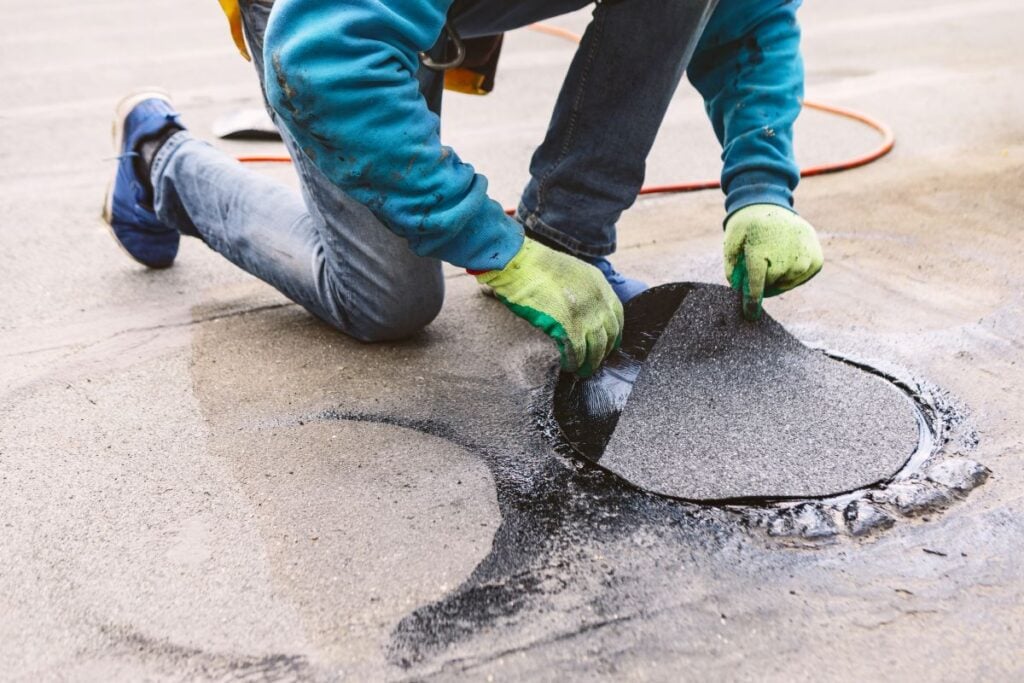
For effective flat roof repairs, locate the exact entry point, thoroughly clean the surface, cut away compromised material if needed, apply a compatible patch, and seal the edges.
- EPDM rubber: Repair with EPDM-compatible primer and patch material designed for rubber roofing.
- TPO or PVC: Use heat welding or manufacturer-approved cold welding adhesive for these single-ply membranes.
- Modified bitumen: Apply compatible torch-down or self-adhered patch material designed for modified bitumen systems.
- Built-up roofing: Use roofing cement and reinforced fabric to repair built-up asphalt and gravel systems.
The patch or membrane should extend 3 to 6 inches beyond the damaged area, and peel-and-stick patches should be positioned by peeling off the backing and placing the patch directly over the damage with at least a 3-inch overlap on all sides. Reinforce the border with a bead of lap sealant or flashing-grade roof caulk along the exposed outer edges. Larger failures may require cutting out a damaged membrane and installing new material over the damaged area.
5. Address Common Trouble Spots Proactively
While repairing the immediate leak, we also evaluate other common trouble spots on the roof since these areas often develop problems at the same rate. Addressing minor issues during a repair visit prevents repeat service calls and extends the life of the entire roof. A flat roof leak rarely happens in isolation, and a complete evaluation usually reveals other early-stage issues worth addressing before they cause damage.
- Roof penetrations: Reseal any flashing or boots around HVAC units, vents, and pipes that show wear.
- Drain inlets: Clear and inspect all drains, scuppers, and downspouts to ensure proper water flow.
- Edge and parapet flashing: Check the perimeter flashings for separation, sealant failure, or membrane lifting.
- Seam reinforcement: Reinforce any seams showing early signs of separation before they progress to leaks.
6. Plan for Long-Term Drainage and Maintenance
The final step in proper flat roof leak repair is planning for ongoing maintenance and addressing any drainage issues that contributed to the problem. A leak repair only solves the immediate symptom, and many flat roof leaks are caused by larger issues like poor drainage, structural settling, or aging membranes. We always discuss long-term planning with property owners so they understand what their roof needs to perform reliably for the years ahead and which flat roof repair options make sense over time.
- Improve drainage: Address ponding water issues by correcting inadequate drainage and restoring proper drainage through drain cleaning, tapered insulation, or additional drains.
- Schedule routine inspections: Build regular maintenance into a biannual inspection schedule so small issues are found early, and keep monitoring the repaired area as part of routine maintenance to help prevent future leaks and support timely repairs.
- Plan for membrane lifecycle: Understand the remaining life of the roof and plan for restoration or replacement as needed. On suitable systems, a roof coating can be a long term solution, and a reflective coating adds protection against water intrusion and UV exposure while improving energy efficiency. If repairs no longer hold or damage is widespread, roof replacement or full replacement may be more appropriate than continued patching, while severe deterioration can ultimately lead to full roof replacement.
- Maintain documentation: Keep records of all repairs, inspections, and maintenance to support warranty claims and future planning.
Frequently Asked Questions About Flat Roof Leak Repair
Property owners often have similar questions when a flat roof leak appears. Below are direct answers to the questions we hear most often. These answers reflect general industry guidance and can be tailored to specific roofing systems during a professional consultation.
How Much Does Flat Roof Leak Repair Cost?
Flat roof leak repair typically costs between $400 and $1,500 for most minor to moderate repairs, although extensive damage, large membrane sections, or structural issues can push costs significantly higher. The final price depends on the size of the leak area, the membrane type, the accessibility of the roof, and any related damage that needs addressing. We always provide a clear, written estimate before starting any work so property owners know exactly what to expect.
- Minor repairs: Small patch jobs typically fall in the lower end of the cost range.
- Moderate repairs: Multiple leak points or larger affected areas tend to fall in the middle range.
- Extensive damage: Significant membrane replacement or structural repairs increase the cost considerably.
- Variable factors: Membrane type, roof accessibility, and additional damage all influence the final price.
Can a Flat Roof Leak Be Fixed in the Rain?
A flat roof leak should not be permanently repaired in the rain because most repair materials require dry, clean surfaces to bond correctly. Emergency temporary measures like tarping or sealing with specialty wet-surface sealants can be done in rainy conditions to stop active leaks, but a proper repair needs to wait for dry weather. We recommend installing temporary protection first and scheduling the permanent repair as soon as conditions allow.
- Permanent repairs: Require dry, clean surfaces for proper material bonding and lasting performance.
- Emergency measures: Tarping or wet-surface sealants can stop active leaks until proper repairs can be completed.
- Timing matters: Schedule the permanent repair for the next available dry weather window.
- Avoid rushed work: Repairs done in wet conditions typically fail within months and need to be redone.
How Long Does Flat Roof Leak Repair Take?
Most flat roof leak repairs take between two and six hours depending on the size of the leak, the membrane type, and the complexity of the repair. Repair time can also increase when technicians open blisters with a utility knife so trapped moisture can escape before patching. Smaller, well-defined leaks can be addressed in a single visit, while leaks requiring extensive diagnosis or large membrane sections may take longer. We always communicate timeline expectations clearly so property owners can plan around the work.
- Simple repairs: Two to four hours for smaller, easily located leaks on accessible roofs.
- Moderate repairs: Four to six hours for leaks requiring more extensive diagnosis or material replacement.
- Complex repairs: Larger sections or multiple leak points may require additional time or return visits.
- Diagnostic time: Finding the leak source can take longer than the actual repair work itself.
Trust Capstone Roofing Inc. for Flat Roof Leak Repair
A flat roof leak is one of the most time-sensitive problems a property owner can face, and getting it fixed correctly the first time matters more than almost any other roofing decision. At Capstone Roofing Inc., we bring deep flat roof experience to every leak repair, and we treat each property with the same care we would give our own. Our team takes time to find the true source of the leak, complete the repair with the right materials, and address the underlying conditions that allowed the leak to develop. We pride ourselves on honest assessments, transparent pricing, and craftsmanship that protects properties for the long term. If you are dealing with a flat roof leak and need expert help to handle it quickly and correctly, we are here to help. Contact Capstone Roofing Inc. today for a free estimate and expert guidance from a team you can trust.



4.8 RATING

5.0 RATING

A+ RATING