

Commercial Roof Maintenance: 5 Must-Have Steps
A well-executed commercial roof maintenance program is one of the smartest investments a property owner can make in protecting the long-term value and performance of any commercial building. At Capstone Roofing Inc., we have helped countless commercial property owners develop and execute maintenance programs that extend roof life, prevent emergency repairs, and protect everything inside their buildings. Commercial roofs face unique challenges, including foot traffic from HVAC technicians, large surface areas, complex drainage systems, and constant exposure to weather. The right maintenance approach addresses each of these factors proactively, catching small issues before they turn into expensive problems.
In this guide, we walk through the five essential steps every commercial roof maintenance program should include along with the context property owners need to evaluate their current approach. We will cover:
- Why preventive maintenance matters: The reasons consistent maintenance delivers better long-term outcomes than reactive repairs.
- The five must-have steps: A clear breakdown of the maintenance activities that make the biggest difference for commercial roofs.
- How to build a sustainable program: Guidance on structuring an ongoing maintenance approach that protects the building year after year.
Why Commercial Roof Maintenance Matters
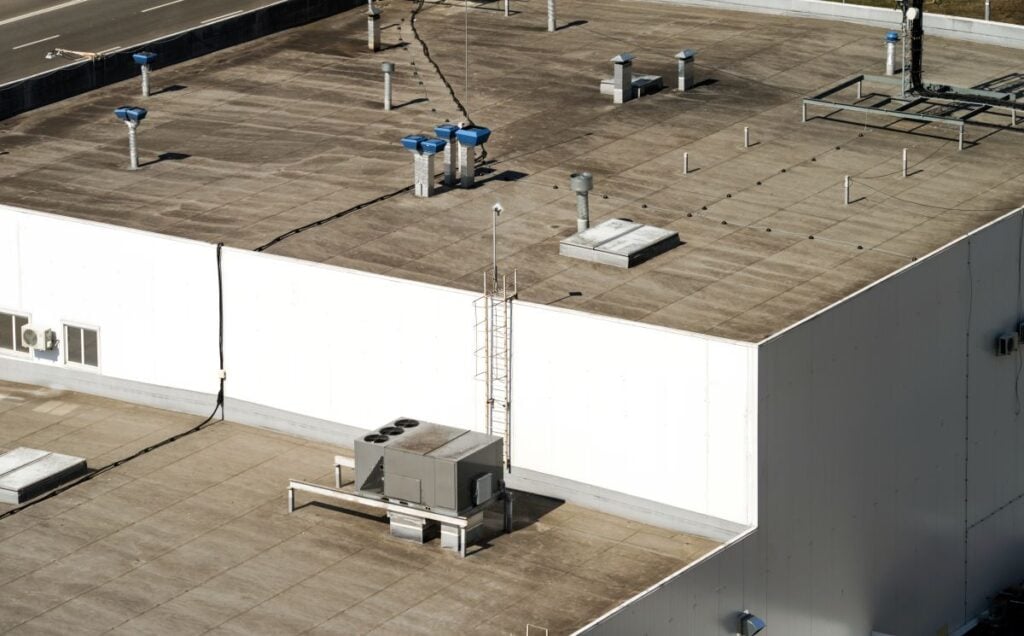
Commercial roofs represent significant investments, and the cost of replacement can run into the hundreds of thousands of dollars on larger buildings. Preventive maintenance protects that investment by catching small issues before they cause major damage. A clogged drain, a lifting seam, or a hairline crack in flashing rarely seems urgent on its own, but each one of these small problems can lead to interior water damage, structural issues, or premature roof failure when left unaddressed. We have seen too many commercial buildings face avoidable emergency repairs simply because routine maintenance was overlooked or postponed.
Common Issues That Develop Without Maintenance
Commercial roofs are exposed to constant stresses, and without regular attention, those stresses accumulate into problems that get progressively harder and more expensive to fix. Understanding what tends to go wrong helps property owners appreciate the value of staying ahead of the issues rather than chasing them after the fact. We see the same set of preventable problems repeatedly across buildings that lack a consistent maintenance approach.
- Drainage failures: Clogged drains, scuppers, or gutters lead to ponding water that accelerates membrane breakdown.
- Membrane damage: Untreated punctures, tears, or seam separations expand under weather stress.
- Flashing deterioration: Failed sealants and flashing seams around penetrations become leak entry points.
- Insulation saturation: Moisture intrusion damages insulation and reduces the energy efficiency of the building.
Benefits of a Proactive Maintenance Program
Property owners who invest in consistent commercial roof maintenance consistently see lower long-term ownership costs, fewer surprises, and stronger building performance overall. The benefits extend well beyond the roof itself, since a healthy roof protects everything inside the building, including inventory, equipment, tenant spaces, and the operations that depend on them. We always emphasize the broad protection that good maintenance delivers.
- Extended roof lifespan: Proactive care can significantly extend the useful life of a commercial roofing system.
- Lower total cost of ownership: Predictable maintenance costs are far less than reactive emergency repairs.
- Warranty protection: Documented maintenance helps preserve manufacturer and contractor warranties.
- Business continuity: A healthy roof reduces the risk of interruptions caused by leaks or roof failures.
5 Must-Have Steps for Commercial Roof Maintenance
A complete commercial roof maintenance program includes a clear sequence of activities that protect the roof, document its condition, and address issues before they grow. Below are the five must-have steps we follow when designing maintenance programs for commercial properties. Each step plays a critical role in extending the life of the roof and protecting the building.
1. Schedule Biannual Professional Inspections
Regular professional inspections are the foundation of any effective commercial roof maintenance program. The National Roofing Contractors Association recommends biannual roof inspections, in spring and fall, along with additional inspections after any major weather event. These inspections identify developing issues, confirm the roof is performing as designed, and create the documentation that supports both maintenance planning and warranty compliance. We always start every maintenance program with a thorough baseline inspection so we have a clear picture of where the roof stands.
- Spring inspection: Identifies damage from winter and prepares the roof for spring storms and summer heat.
- Fall inspection: Addresses summer wear and verifies the roof is ready for winter weather.
- Post-storm inspection: Any major weather event warrants an additional inspection to catch storm damage early.
- Documented findings: Each inspection produces a detailed report with photos and recommendations.
2. Keep the Roof Surface Clean and Clear
A clean roof surface is a healthy roof surface. Debris like leaves, branches, and dirt can clog drains, hold moisture against the membrane, and provide organic material that supports biological growth. Keeping the roof clean is one of the simplest yet most effective steps in any commercial maintenance program. We always recommend regular cleaning visits along with prompt response to debris that accumulates after storms or seasonal changes.
- Debris removal: Clear leaves, branches, and accumulated debris from the entire roof surface.
- Drain and scupper clearing: Keep all drainage points free of obstructions for proper water flow.
- Gutter maintenance: Clear external gutters and downspouts to support overall drainage performance.
- Biological growth prevention: Address algae or moss buildup before it can damage the roofing membrane.
3. Maintain the Drainage System
Effective drainage is one of the most important factors in commercial roof performance. Standing water on a flat roof can cause significant damage in a relatively short time, and drainage issues are among the most common causes of preventable roof failures. We always evaluate the drainage system as part of every maintenance visit, since even minor issues can lead to serious water management problems during heavy rainfall.
- Primary drain inspection: Check internal drains for blockages, damaged strainers, or sealant failures.
- Scupper maintenance: Verify scupper openings are clear and functioning correctly during peak rainfall events.
- Downspout and conductor checks: Confirm all external drainage components are connected and flowing properly.
- Ponding water assessment: Identify any low spots where water collects and address the underlying drainage issue.
4. Inspect and Repair Flashings, Seams, and Penetrations
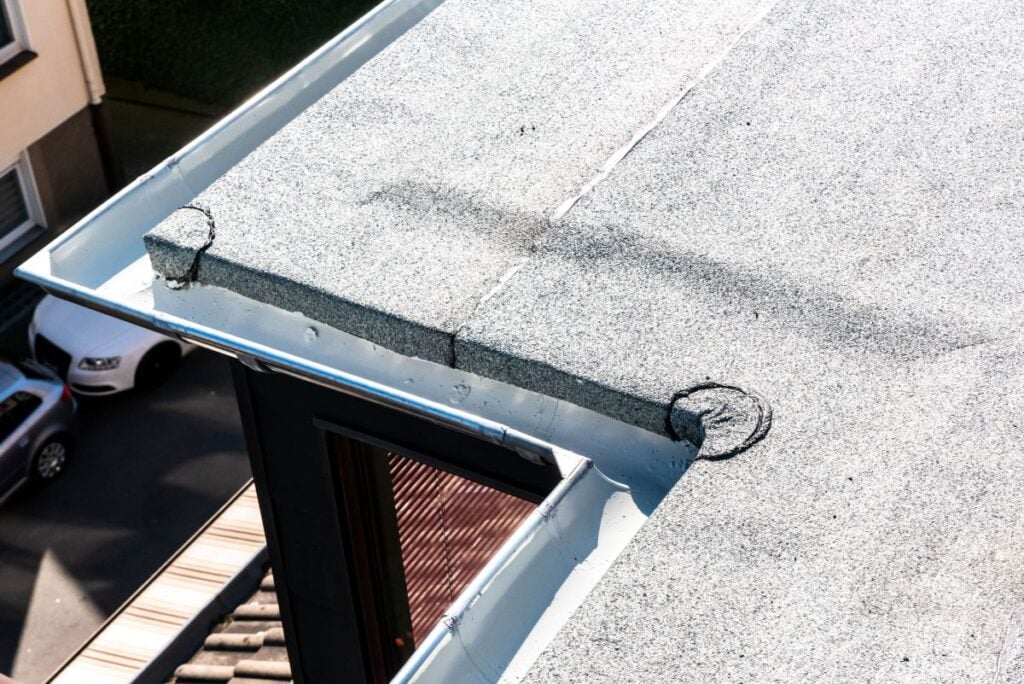
Most commercial roof leaks originate at the points where the roofing membrane meets something else, including walls, vents, HVAC curbs, drains, and skylights. These flashing and penetration points are the most common failure locations and deserve special attention during every maintenance visit. We always inspect these areas carefully and address any issues before they have a chance to develop into leaks.
- Flashing condition: Check flashing around all roof penetrations for separation, lifting, or sealant failure.
- Sealant assessment: Inspect all sealants for cracks, brittleness, or signs of weather-related degradation.
- Seam integrity: Examine membrane seams for separation, bubbling, or any signs of bond failure.
- Penetration evaluation: Look at every pipe, vent, curb, and accessory for proper sealing and condition.
5. Document Everything for Long-Term Planning
Documentation is what transforms a series of maintenance visits into a strategic program that protects the roof over its entire service life. Detailed records of inspections, repairs, and observations give property owners the information they need to plan for future maintenance, manage budgets, and support warranty claims. We always provide thorough documentation as part of every commercial maintenance program.
- Inspection reports: Detailed written reports with photos for every inspection visit.
- Repair records: Clear documentation of all repairs completed, materials used, and dates of service.
- Budget planning: Use documented findings to forecast future maintenance and replacement needs.
- Warranty support: Maintained records support warranty claims and demonstrate compliance with maintenance requirements.
Building a Sustainable Commercial Roof Maintenance Program
A successful commercial roof maintenance program is not a one-time effort. It is an ongoing relationship between the property owner and the roofing professional who knows the building. We always design maintenance programs around the specific needs of each property, since no two commercial roofs are exactly alike.
Factors That Influence Maintenance Frequency
Different commercial properties require different maintenance schedules based on a range of factors. Understanding these variables helps property owners and roofing partners design programs that match the actual needs of each building rather than applying a one-size-fits-all approach. We always evaluate these factors when developing or reviewing a maintenance program.
- Roof age and condition: Older roofs typically benefit from more frequent inspections than newer systems.
- Roof type and material: Different membrane materials have different maintenance requirements and vulnerabilities.
- Foot traffic level: Roofs with frequent HVAC or equipment service experience accelerated wear.
- Climate and weather exposure: Properties in severe weather regions may need additional inspections and seasonal preparation.
Frequently Asked Questions About Commercial Roof Maintenance
Commercial property owners often have similar questions about maintenance programs. Below are direct answers to the questions we hear most often. These answers reflect general industry guidance and can be tailored to specific properties during a professional consultation.
How Often Should a Commercial Roof Be Maintained?
A commercial roof should receive professional inspections at least twice a year, in spring and fall, along with additional inspections after major weather events. Routine cleaning and minor maintenance may occur more frequently depending on the property’s surroundings, debris load, and rooftop equipment. We help property owners determine the right cadence based on the specific factors affecting their building.
- Standard frequency: Twice annually for professional inspections.
- Storm response: Additional inspections after any severe weather event.
- Heavy debris areas: More frequent cleaning visits for properties near mature trees.
- High-traffic roofs: Increased attention for buildings with frequent HVAC service activity.
What Does a Commercial Roof Maintenance Program Cost?
The cost of a commercial roof maintenance program varies significantly based on roof size, system type, the number of penetrations and rooftop equipment, accessibility, and the scope of services included. Most programs cost a fraction of what a single emergency repair would cost, and the savings from preventive maintenance typically far exceed the investment. We always provide clear, transparent pricing tailored to each property’s specific needs.
- Size variation: Larger roofs naturally cost more to maintain than smaller ones.
- System complexity: Roofs with many penetrations or rooftop equipment require more time and attention.
- Service scope: Comprehensive programs cost more than basic inspection-only options.
- Long-term value: The cost of preventive maintenance is typically far less than reactive emergency repairs.
What Should Be Included in a Commercial Roof Maintenance Plan?
A complete commercial roof maintenance plan should include scheduled professional inspections, routine cleaning, drainage system maintenance, flashing and seam inspection, prompt repair of minor issues, and detailed documentation of all activities. The plan should also align with manufacturer warranty requirements and include provisions for post-storm response. We always tailor maintenance plans to match the specific roof system and building needs.
- Scheduled inspections: Biannual professional inspections at minimum.
- Cleaning services: Regular debris removal and surface cleaning as needed.
- Drainage maintenance: Ongoing attention to drains, scuppers, and gutters.
- Detailed documentation: Complete records of all maintenance activities and findings.
Trust Capstone Roofing Inc. for Commercial Roof Maintenance
A commercial property represents a significant investment, and protecting that investment requires a roofing partner who takes maintenance as seriously as the property owner does. At Capstone Roofing Inc., we bring deep commercial roofing experience to every maintenance program and treat each building with the same care we would give our own. Our team takes time to understand each property’s specific roof system, identify the right maintenance approach, and deliver thorough, well-documented service that protects the building over the long term. We pride ourselves on honest assessments, transparent communication, and craftsmanship that delivers reliable performance year after year. If you are evaluating commercial roof maintenance options for your property or want a professional assessment of your current program, we are here to help. Contact Capstone Roofing Inc. today for a free inspection and expert guidance from a team you can trust.


4.8 RATING

5.0 RATING

A+ RATING